In an increasingly divided world, more people than ever are searching for one powerful, universal reminder — be kind. Whether you’re traveling, learning a new language, or simply trying to connect with someone from another culture, knowing how to express kindness matters deeply. It’s not just a phrase — it’s a value. A bridge. A way to tell another human being: I see you. I respect you. You matter.
If you searched for “be kind in different languages”, chances are you’re someone who believes in the power of gentle words. Maybe you want to write something meaningful. maybe you’re learning to connect with a global audience. Or perhaps, you simply want to remember — kindness is not limited to one language.
Today, let’s explore how different cultures express be kind — and more importantly — what kindness really means to them.
What Does “Be Kind” Really Mean?
Being kind is more than just being “nice.”
It is compassion in action, gentleness in understanding, humility in communication, and respect in every interaction.
Every culture expresses kindness differently — some with softness, some with honor, some with warmth, and some even with gratitude.
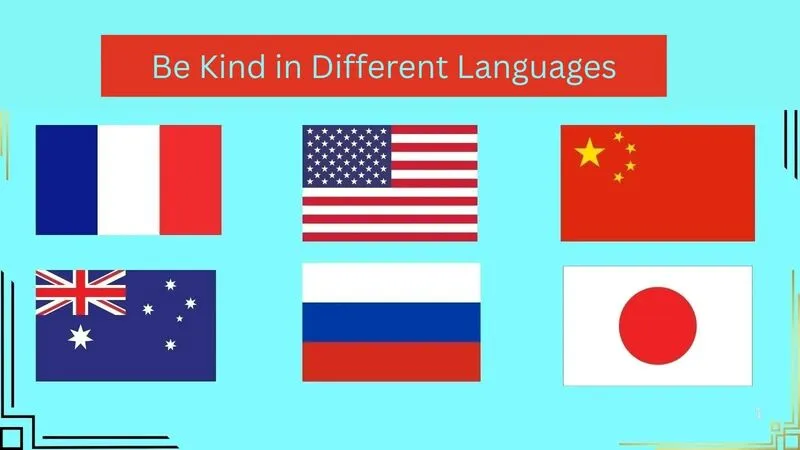
How to Say Be Kind in Different Languages
| Language | Phrase | Cultural Emotion Behind It |
|---|---|---|
| Spanish | Sé amable | Soft, friendly, often used to remind others to speak or act gently |
| French | Sois gentil(le) | Suggests elegance, politeness — kindness is cultural etiquette |
| Arabic | كن لطيفًا (Kun lateefan) | “Be gentle and comforting” — deeply spiritual and respectful |
| Japanese | 優しくして (Yasashiku shite) | A request to act with emotional sensitivity and care |
| Korean | 친절하게 해주세요 (Chinjeolhage haejuseyo) | Polite and humble — kindness is seen as honor |
| Hindi / Urdu | दयालु बनो / مہربان بنو (Dayalu bano / Meharban bano) | Kindness as mercy, protection — often spiritual |
| German | Sei freundlich | Direct yet sincere — kindness seen as social responsibility |
| Swahili | Kuwa mwema | Means to be good, pure, morally kind at heart |
| Italian | Sii gentile | Warm, melodic — kindness as grace and style |
| Portuguese | Seja gentil | Emotional, heart-centric expression of empathy |
Kindness Means Different Things in Different Cultures
Japan — Kindness is emotional awareness
In Japan, being kind means quietly protecting others from discomfort. Silence, timing, and sensitivity matter more than words.
Latin Cultures — Kindness is warm and loud
In Spanish-speaking cultures, kindness is felt through hospitality, physical warmth, and joyful tone — not just polite words.
Middle Eastern Culture — Kindness is honor and protection
To be kind is to be honorable — ensuring others feel safe, respected, and never humiliated.
South Asian Culture — Kindness is spiritual and selfless
In Hindi or Urdu, kindness is deeply linked to God, blessings, and doing good without expectation of return.
Why Learning “Be Kind” Matters Today
Because it’s more than translation — it’s connection.
When you say please be kind in someone’s language, you don’t just speak to their ears — you speak to their heart.
You remind them of something the world is slowly forgetting.
Final Thought
Languages change. Technology evolves. Trends fade.
But kindness will always be a timeless language of humanity.
Wherever you go — whisper it, live it, spread it in every tongue:
Be kind, always.