Let’s talk Forward Facing Car Seat Weight because this is one of those parenting topics that sounds simple until you’re standing in the baby aisle reading labels like it’s a final exam.
One minute your kid fits perfectly, the next you’re wondering if they’ve grown overnight.
We’ve all been there, second-guessing whether it’s “too soon” or “just right.”
The truth is, weight limits matter more than most parents realize, and getting them wrong can affect safety.
Don’t worry though no lectures here.
Just real, easy-to-understand info to help you feel confident every time you buckle up.
What Is a Forward-Facing Car Seat?
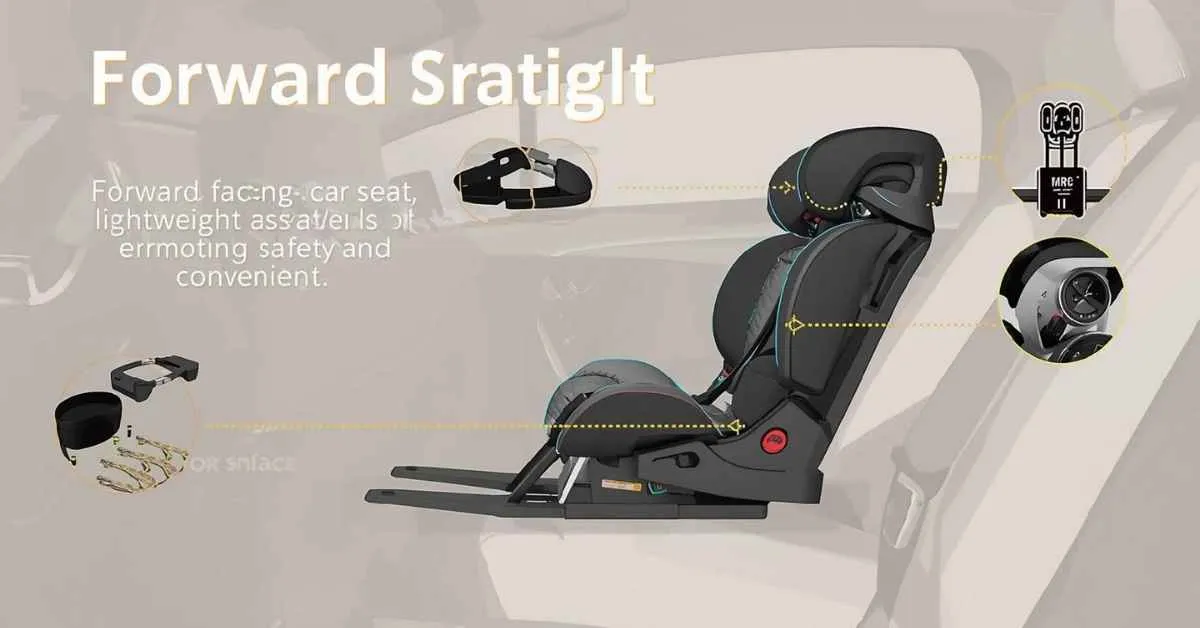
A forward-facing car seat is a type of child safety seat designed for toddlers who have outgrown the rear-facing stage but are not yet ready for a booster seat. Unlike rear-facing seats, which position a child so that in a crash the force is distributed across the back, neck, and head, forward-facing seats use a five-point harness to secure the child’s shoulders, hips, and pelvis. This helps reduce movement during sudden stops or collisions and provides added protection for a growing toddler.
Most forward-facing seats are either convertible car seats or combination seats. Convertible seats can start in rear-facing mode and then convert to forward-facing as the child grows, while combination seats are designed solely for forward-facing use and often later convert to a booster.
Transitioning to a forward-facing seat is a significant milestone. Parents must pay close attention not only to their child’s age but also to weight and height requirements specified by both the car seat manufacturer and safety authorities. Generally, children should remain rear-facing until at least 2 years old or until they reach the rear-facing weight limit. After this, they can move to a forward-facing car seat, staying within the forward-facing weight and height limits to ensure proper harness fit and maximum safety.
Choosing the right seat type and understanding its function helps parents make informed decisions, ensuring their child is both comfortable and well-protected during every ride.
Minimum Weight Requirements for Forward-Facing Car Seats
One of the most important factors in determining when a child is ready for a forward-facing car seat is weight. While age is often mentioned, safety experts emphasize that weight, along with height, is the primary consideration. Moving a child to a forward-facing position before they meet the minimum weight requirement can increase the risk of injury in a crash, as their neck and spine may not yet be strong enough to handle the forces involved.
Most forward-facing car seats have a minimum weight range of 20 to 25 pounds, though this can vary slightly by manufacturer. Convertible seats that start in rear-facing mode may have higher minimums for forward-facing, often around 22 to 25 pounds. Before making the switch, parents should check both the car seat manual and the child’s growth measurements to ensure their child meets the weight requirement.
It’s important to remember that weight is only one part of the equation. A child may meet the minimum weight but still be too young or small for the harness to fit properly. The harness should sit at or above the child’s shoulders, and the seat should fit securely in the vehicle.
Following the minimum weight guidelines is critical not only for legal compliance but also for maximizing safety in every ride. Staying informed about your car seat’s specifications and your child’s measurements ensures a smooth and safe transition from rear-facing to forward-facing.
Maximum Weight Limits for Forward-Facing Car Seats
Just as important as the minimum weight is the maximum weight limit for forward-facing car seats. Every car seat is designed to protect children within a specific weight range, and exceeding this limit can compromise safety. Most forward-facing seats accommodate children up to 40 to 65 pounds, depending on the seat type and manufacturer. Convertible car seats often support higher weight limits, while combination seats may have lower maximums.
Exceeding the forward-facing weight limit can affect how well the harness restrains a child during a crash. The five-point harness is engineered to distribute crash forces across the strongest parts of a child’s body—shoulders, hips, and pelvis. If a child is too heavy for the harness, it may not fit correctly, reducing its effectiveness and increasing the risk of injury.
Parents should also consider the height limits, as some children may outgrow the seat’s headrest or top harness slots before reaching the weight maximum. If a child exceeds either weight or height limits, it’s time to transition to a booster seat. Booster seats are designed for older children who have outgrown forward-facing car seats but are still too small to use the vehicle’s seat belt alone.
Regularly checking your child’s weight and growth against the car seat manufacturer’s specifications ensures that they remain in a seat appropriate for their size. By respecting the maximum weight limits, parents can maintain the highest level of protection for their child, keeping safety the top priority on every journey.
Age vs Weight vs Height: What Determines Readiness?
When it comes to transitioning a child to a forward-facing car seat, parents often wonder which factor matters most: age, weight, or height. The answer is that all three play a role, but weight and height are the most critical. Age alone does not guarantee a child is ready for the forward-facing position. While many parents follow the general guideline of moving children at around 2 years old, a child’s size and growth must also meet the car seat’s specifications.
Weight determines whether the child’s body can safely handle the forces in a crash, while height ensures that the harness fits properly and the child’s head is protected by the seat’s headrest. The five-point harness should sit at or above the shoulders, and the child’s head should not extend beyond the top of the seat.
Age serves as a helpful reference, but it is secondary to these measurements. Some toddlers may reach the minimum forward-facing weight at 18 months, while others may not until 3 years old. Parents should always measure their child and compare the results to both the manufacturer’s guidelines and recommendations from organizations like the AAP and NHTSA.
Using a weight and height chart can simplify the process. These charts indicate the range for safe forward-facing use, helping parents make informed decisions. By considering age, weight, and height together, caregivers can ensure a safe, comfortable, and legally compliant transition from rear-facing to forward-facing car seats.
Safety Guidelines from Experts
Ensuring your child’s safety in a forward-facing car seat requires following expert-backed guidelines. The American Academy of Pediatrics (AAP) strongly recommends keeping children in a rear-facing seat until they reach the maximum weight or height allowed by the seat, typically at least 2 years old. Once children exceed these limits, they can transition to forward-facing seats with a five-point harness, which is the safest option until they are ready for a booster.
The National Highway Traffic Safety Administration (NHTSA) provides additional guidance, emphasizing that children should remain in forward-facing seats with harnesses as long as possible. The harness keeps the child secured in case of sudden stops or collisions, distributing crash forces across the strongest parts of the body—shoulders, chest, and hips. Both the AAP and NHTSA warn against moving a child forward-facing too early, as doing so can increase the risk of head, neck, and spinal injuries.
Experts also highlight the importance of proper installation and fit. The car seat must be installed tightly in the vehicle, and the harness should be snug with the chest clip at armpit level. Parents should also regularly check expiration dates and avoid using damaged seats.
By following these authoritative guidelines, parents can make informed decisions, ensuring their child is in the safest possible position for every car ride. Adhering to expert recommendations minimizes risks and maximizes protection during the critical forward-facing stage.
Forward-Facing vs Rear-Facing: Safety Comparison
When deciding whether to transition a child to a forward-facing car seat, it’s essential to understand the safety differences between rear-facing and forward-facing seats. Rear-facing seats are universally recognized as the safest option for young children, as they cradle the child’s head, neck, and spine during a collision, distributing crash forces across the entire body. This position significantly reduces the risk of serious injuries, especially in frontal crashes, which are the most common type of accident.
Forward-facing car seats, on the other hand, are designed for older toddlers who have outgrown the rear-facing weight or height limits. These seats use a five-point harness system, which secures the child’s shoulders, hips, and pelvis. While forward-facing seats provide good protection, they are not as effective at absorbing crash forces as rear-facing seats, particularly for the neck and spine. This is why experts recommend keeping children rear-facing as long as possible.
Parents often make the mistake of transitioning too early due to convenience or assumptions about age. Safety studies indicate that children who remain rear-facing until at least 2 years old or until they reach the maximum rear-facing limits have a significantly lower risk of injury in crashes compared to children moved forward-facing prematurely.
By understanding the differences between rear-facing and forward-facing seats, parents can make informed decisions, balancing growth, comfort, and safety. Proper timing of the transition ensures that children benefit from maximum protection while moving safely through the next stage of car seat use.
Choosing the Right Forward-Facing Car Seat
Selecting the right forward-facing car seat is crucial to ensure your child’s safety and comfort. Parents have several options, with the most common being convertible seats and combination seats. Convertible seats are versatile, starting in rear-facing mode and later switching to forward-facing, making them ideal for families who want one seat that grows with their child. Combination seats are designed solely for forward-facing use but often transition into booster seats, providing long-term usability.
When choosing a seat, the weight and height limits should always match your child’s current size. Look for seats with adjustable harnesses and headrests to accommodate growth, ensuring the harness remains at or above your child’s shoulders and the seat continues to provide proper head protection.
Safety certifications are another critical factor. Always check that the car seat meets FMVSS 213 standards and, if available, look for additional safety ratings from organizations such as Consumer Reports or IIHS. Some seats also offer energy-absorbing foam, side-impact protection, and reinforced frames for extra security.
Comfort and ease of use are also important. Seats with removable covers, machine-washable fabrics, and simple installation mechanisms can make daily use less stressful for parents. Additionally, verify that the seat fits your vehicle properly, as a tight, secure installation is vital for effectiveness.
By carefully considering type, size, safety features, and installation compatibility, parents can select a forward-facing car seat that maximizes protection while providing comfort and longevity for their child.
Common Mistakes Parents Make
Even with the best intentions, many parents make mistakes when transitioning their child to a forward-facing car seat. Understanding these common errors can help prevent safety risks and ensure the child remains properly protected.
One frequent mistake is moving a child forward-facing too early. Many parents assume that age alone—often 2 years—is enough, but children may not yet meet the weight or height requirements for forward-facing use. Ignoring these limits can increase the risk of injury in a crash.
Another common issue is improper harness adjustment. The harness should always sit at or above the shoulders, and the straps must be snug, with no slack. Parents sometimes leave the harness too loose, incorrectly positioned, or forget to use the chest clip, which reduces effectiveness in a collision.
Incorrect installation is another significant problem. Even a high-quality seat cannot provide protection if it’s loose or improperly secured in the vehicle. Parents should follow the car seat manual, use LATCH or seat belt systems properly, and check that the seat does not move more than an inch side-to-side or front-to-back.
Other mistakes include using expired or damaged car seats, failing to transition to a booster when appropriate, or ignoring the child’s growth changes over time.
By avoiding these errors, parents can ensure their child benefits from maximum protection. Regularly reviewing installation, harness fit, and weight or height limits helps keep children safe as they progress through each stage of car seat use.
Frequently Asked Questions (FAQs)
Parents often have many questions when it comes to forward-facing car seats. Addressing these concerns helps ensure children remain safe and properly secured.
1. Can a 2-year-old be forward-facing?
Yes, a 2-year-old can be forward-facing only if they have reached the rear-facing weight or height limit specified by the car seat manufacturer. Age alone is not enough—weight and height are the most critical factors for safety.
2. What if my child is underweight or overweight?
Parents should always follow the car seat’s weight and height guidelines. If a child is underweight, they may remain rear-facing longer. If overweight, ensure the harness fits snugly and check the maximum weight limit. Exceeding the limit requires transitioning to a booster seat or choosing a seat with a higher maximum weight.
3. How long can a child stay in a forward-facing car seat?
Children should remain in a forward-facing car seat until they reach the maximum weight or height limit, usually between 40–65 pounds. After this, a properly fitted booster seat is recommended.
4. Are booster seats next after forward-facing?
Yes, once a child exceeds the forward-facing car seat limits, a booster seat helps position the vehicle seat belt correctly across the chest and lap, providing continued protection.
5. How do I know the harness fits correctly?
The harness should sit at or above the shoulders for forward-facing use, and the straps should be snug with the chest clip at armpit level. A proper fit prevents excessive movement in a collision.
By understanding these common questions and following expert guidelines, parents can make safe, informed decisions for every stage of car seat use.
Conclusion
Ensuring your child’s safety in the car starts with using the right car seat at the right time. Forward-facing car seats play a critical role in protecting toddlers who have outgrown the rear-facing stage but are not yet ready for a booster. Following weight, height, and age guidelines is essential to maximize safety, as the five-point harness is designed to work effectively only within the recommended limits.
Parents should pay close attention to both the minimum and maximum weight limits for forward-facing seats, as well as proper harness placement and secure installation. Consulting guidelines from trusted organizations like the American Academy of Pediatrics (AAP) and the National Highway Traffic Safety Administration (NHTSA) ensures that decisions are based on the latest safety research and expert recommendations.
Choosing the right forward-facing car seat, whether a convertible or combination model, involves considering growth potential, comfort, installation ease, and safety certifications. Avoiding common mistakes, such as transitioning too early, using a loose harness, or exceeding weight limits, can prevent injuries and give parents peace of mind.
Ultimately, every ride should prioritize safety over convenience. By measuring your child, following manufacturer instructions, and adhering to expert guidelines, you can confidently navigate the transition from rear-facing to forward-facing. Staying informed and proactive ensures that your child is well-protected at every stage, giving families the reassurance that comes from knowing their little ones are safe, secure, and ready for the next milestone in their car seat journey.