If you’ve landed on this page, you’re likely searching for a meaningful way to express “grateful” in another language — whether to connect with someone from a different culture, write a heartfelt message, or simply deepen your global vocabulary.
The word grateful is one of the most powerful emotional expressions we can share — conveying thankfulness, appreciation, and a positive mindset. But how do you say grateful beyond English? That’s exactly what this guide will help you with.
By the end of this article, you’ll not only learn how to say grateful in 50+ languages but also understand its meaning and how to use it correctly in real conversations. Whether you’re a traveler, language enthusiast, student, or global communicator, this article will enrich your expression of gratitude around the world.
What Does “Grateful” Really Mean?

The word grateful means feeling or showing an appreciation for something received — whether it’s a kind act, a gift, support, or just life itself. It comes from the Latin word gratus, meaning pleasing or thankful.
Synonyms in English:
- Thankful
- Appreciative
- Obliged
- Indebted (in formal cases)
Common Usage Examples:
- I’m so grateful for your help.
- We are grateful for this opportunity.
- Feeling grateful every day improves mental well-being.
Why Learn “Grateful” in Different Languages?

People search for this word in other languages for many reasons:
- 🌏 To connect across cultures
- 💌 To write thank-you notes, emails, or cards
- ✈️ While traveling abroad
- 🎓 For language learning and personal growth
- 💬 To communicate more respectfully in multicultural settings
Knowing how to say grateful in someone else’s language can instantly create trust, warmth, and a human bond.
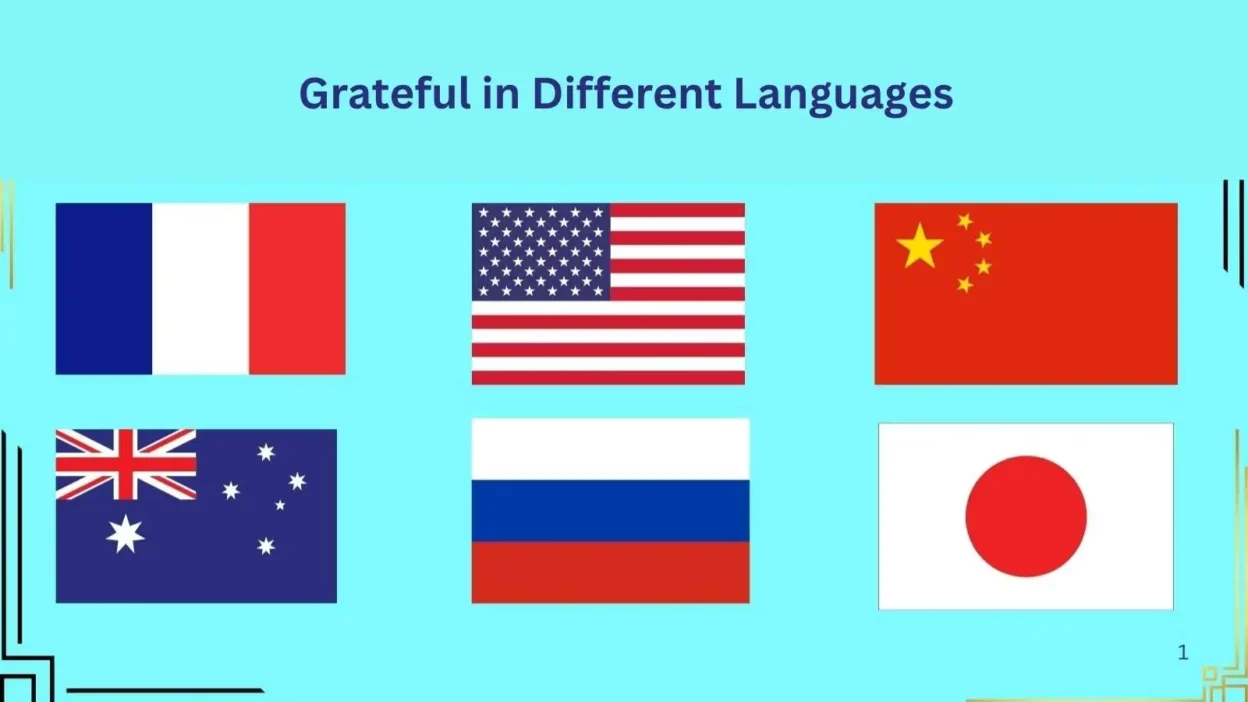
How to Say Grateful in 50+ Languages (with Pronunciation Tips)

| Language | Word for “Grateful” | Pronunciation (approx.) |
| Spanish | Agradecido / Agradecida | ah-grah-deh-SEE-doh / -dah |
| French | Reconnaissant(e) | ruh-koh-neh-SAHN(t) |
| German | Dankbar | DANK-bar |
| Italian | Grato / Grata | GRAH-toh / GRAH-tah |
| Portuguese | Grato / Grata | GRAH-too / GRAH-tah |
| Arabic | ممتن (Mumtann) | moom-TEN |
| Russian | Благодарный | blah-gah-DAR-ny |
| Hindi | आभारी (Ābhārī) | aa-BHAA-ree |
| Chinese (Mandarin) | 感激 (Gǎnjī) | gahn-JEE |
| Japanese | 感謝している (Kansha shite iru) | KAHN-sha sh’teh ee-roo |
| Korean | 감사하는 (Gamsahaneun) | gam-sah-ha-neun |
| Urdu | شکر گزار (Shukr Guzar) | shook-r goo-ZAAR |
| Turkish | Minnettar | meen-net-TAR |
| Greek | Ευγνώμων (Efgnómon) | ef-GNO-mon |
| Dutch | Dankbaar | DANK-bar |
| Swahili | Mwenye shukrani | mwe-nye shoo-KRAH-nee |
| Persian (Farsi) | سپاسگزار (Sepāsgozār) | seh-PAAS-go-zar |
| Polish | Wdzięczny / Wdzięczna | vjench-nee / vjench-nah |
| Thai | ขอบคุณ (K̄hxbkhuṇ) | khawp-KOON |
| Vietnamese | Biết ơn | bee-et UN |
…and many more below!
Sentence Examples for Different Occasions

Here are some ways to use the word “grateful” in full sentences across cultures:
- English: I am truly grateful for your kindness.
- Spanish: Estoy muy agradecido por tu ayuda. (I’m very grateful for your help.)
- French: Je suis reconnaissant pour ton soutien. (I’m grateful for your support.)
- German: Ich bin dir sehr dankbar. (I’m very grateful to you.)
- Arabic: أنا ممتن لك كثيراً. (Ana mumtann laka kathiran.)
- Japanese: ご親切に感謝しています。 (Goshinsetsu ni kansha shiteimasu.)
- Hindi: मैं आपके आभारी हूँ। (Main aapke ābhārī hoon.)
- Russian: Я благодарен тебе. (Ya blagodaren tebe.)
- Portuguese: Sou muito grato pela sua ajuda.
- Swahili: Ninashukuru sana kwa msaada wako.
These examples can be especially helpful for thank-you cards, international customer emails, or friendly conversations with people from different cultures.
Benefits of Using “Grateful” in Global Conversations

✔️ Builds stronger connections
✔️ Enhances emotional intelligence
✔️ Shows cultural respect and humility
✔️ Encourages mutual appreciation
✔️ Promotes positive vibes and kindness worldwide
Conclusion:
No matter the language, the feeling of gratitude is universal. It transcends words and cultures. Learning how to say grateful in different languages not only improves your communication but also shows respect, warmth, and connection — qualities the world needs more of today.
Next time you want to thank someone, say it in their language — and watch the magic happen.