A simple “hello” holds more power than we realize. It can start friendships, bridge cultural gaps, and build trust between strangers. Across the world, people greet each other differently—some bow, some place their hand on their heart, while others greet with warm smiles or even cheek kisses. But at the heart of it all lies one universal truth: greeting someone is an act of kindness, respect, and humanity.
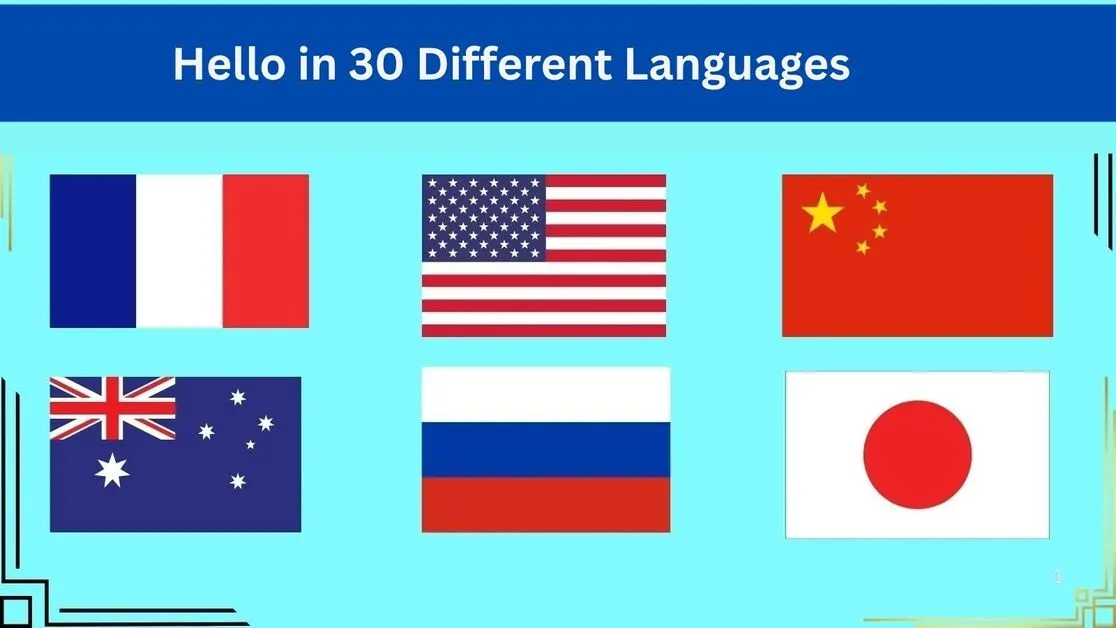
In this article, we explore how to say hello in 30 different languages, while diving into the meaning, cultural emotion, and beauty behind each greeting.
🌍 Why Learning “Hello” in Different Languages Matters
In a world where cultures are becoming more interconnected, knowing how to greet someone in their native language is more than just polite—it’s powerful. It shows respect, genuine interest, and cultural empathy.
Whether you’re traveling, meeting someone from a different country, or simply curious about the world, greeting someone in their language is the first step toward connection.
📜 How to Say Hello in 30 Different Languages (With Cultural Insights)
| Language | Word for “Hello” | Pronunciation | Cultural Insight |
|---|---|---|---|
| English | Hello | heh-loh | A universal greeting used informally and formally. |
| Spanish | Hola | oh-lah | Often said with a friendly tone; used casually in daily life. |
| French | Bonjour | bon-zhoor | Literally means “good day”; considered polite and elegant. |
| German | Hallo / Guten Tag | hah-loh / goo-ten tahg | “Hallo” is casual, “Guten Tag” is more formal. |
| Italian | Ciao / Buongiorno | chow / bwon-jor-no | “Ciao” is informal; used for both hello and goodbye. |
| Portuguese | Olá | oh-lah | Warm and friendly; commonly used in Portugal and Brazil. |
| Chinese (Mandarin) | 你好 (Nǐ hǎo) | nee-how | Means “you good?”—a polite way of greeting. |
| Japanese | こんにちは (Konnichiwa) | kon-nee-chee-wah | Used in late morning to evening; bowing often follows. |
| Korean | 안녕하세요 (Annyeong haseyo) | an-nyong ha-se-yo | A respectful way to say hello. |
| Arabic | مرحبا (Marhaba) | mar-ha-ba | A warm and welcoming greeting used across Arab countries. |
| Hindi | नमस्ते (Namaste) | na-mas-tey | Said with hands pressed together, symbolizing respect. |
| Urdu | السلام عليكم (Assalamualaikum) | as-sa-lam-u-alaikum | Means “peace be upon you”; common in Muslim culture. |
| Russian | Привет / Здравствуйте | pree-vyet / zdrast-vooy-tye | “Privet” is informal; “Zdravstvuyte” is formal. |
| Greek | Γειά σου / Γειά σας | ya soo / ya sas | “Ya soo” for informal, “Ya sas” for formal situations. |
| Turkish | Merhaba | mehr-hah-bah | Literally translates to “I greet you.” |
| Dutch | Hallo | hah-loh | Casual, often accompanied by eye contact and a smile. |
| Swedish | Hej | hay | Friendly and simple; used in both formal and informal settings. |
| Danish | Hej | hi | Similar to Swedish; often accompanied by a handshake. |
| Norwegian | Hei | hi | Warm and used commonly in everyday life. |
| Finnish | Hei / Moi | hay / moy | “Moi” is more casual and commonly used among youth. |
| Polish | Cześć | cheshch | Informal; for formal, they use “Dzień dobry.” |
| Hebrew | שלום (Shalom) | sha-lom | Means “peace” and is used for both hello and goodbye. |
| Thai | สวัสดี (Sawasdee) | sah-wah-dee | Usually followed by “ka” (female) or “krub” (male). |
| Vietnamese | Xin chào | sin chow | Polite and used in both formal and informal situations. |
| Swahili | Habari / Jambo | ha-bah-ree / jam-boh | Common greetings in East Africa meaning “news?” |
| Indonesian | Halo / Apa kabar | hah-loh / ah-pah kah-bar | “Apa kabar” means “how are you?” |
| Filipino (Tagalog) | Kamusta | kah-moos-tah | Derived from Spanish “¿cómo está?”—how are you? |
| Malay | Hai / Selamat pagi | hi / suh-la-mat pah-gee | “Selamat pagi” means “good morning.” |
| Bengali | নমস্কার (Nomoshkar) | no-mosh-kar | Respectful greeting used in West Bengal and Bangladesh. |
| Turkish | Selam | seh-lahm | Informal, used among friends and family. |
| Zulu | Sawubona | sah-woo-boh-nah | Means “I see you,” recognizing one’s presence and dignity. |
💬 The Cultural Beauty Behind a Simple Greeting
Every greeting tells a story.
- “Namaste” in India is more than a word—it’s a gesture of respect, humility, and spiritual connection.
- “Sawubona” in Zulu translates to “I see you,” meaning you are acknowledged and valued.
- “Shalom” in Hebrew carries the deep meaning of peace, harmony, and wholeness.
- “Assalamualaikum” in Muslim culture wishes peace upon the other person—it’s a prayer and greeting together.
These greetings aren’t just sounds. They are pieces of history, tradition, and culture passed through generations.
🌐 Greeting Etiquette Around the World
| Country/Region | Greeting Gesture |
|---|---|
| Japan | Bow politely—lower bows show more respect. |
| France & Italy | Light cheek kisses (la bise). |
| Middle East | Handshake + hand over heart to show sincerity. |
| India & Nepal | Hands together, slight bow, “Namaste.” |
| USA & UK | Handshake, smile, or casual “Hey!” |
| New Zealand (Māori) | Hongi—pressing noses and foreheads together. |
✨ Final Thoughts:
No matter where you go in the world, a greeting is an invitation to connect. It’s a small act that can make someone feel seen, respected, and appreciated.