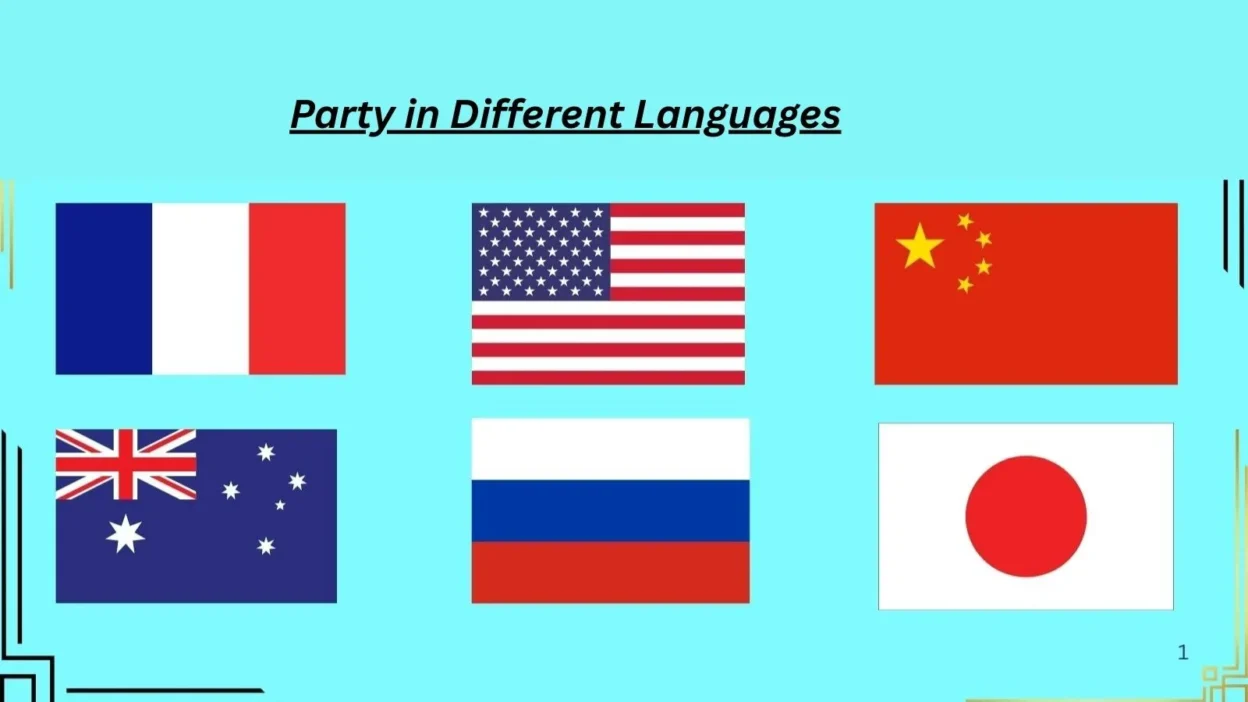
When people search for “party in different languages,” they often want to connect with others across cultures, plan international events, or simply learn how to say a fun word that brings people together.
A party is not just a gathering—it’s about celebration, joy, and creating memories. This blog will help you understand how to say party in many different languages, explain its cultural context, and show you how to use these words naturally in conversation.
By the end, you’ll be ready to talk about parties with people from anywhere in the world!
1. What Does “Party” Mean?
The word party usually refers to a gathering for celebration, music, food, and fun. But in different languages, the word may also carry cultural or traditional meanings.
2. Why Learn “Party” in Different Languages?
- To connect with friends abroad
- To understand cultural celebrations
- To travel with confidence
- To make your conversations more global and fun
3. Party in Spanish
The most common word is “fiesta” – used for birthdays, festivals, and social gatherings.
4. Party in French
In French, “fête” is used for a celebration. For casual gatherings, people may also say “soirée.”
5. Party in German
The word is simply “Party,” borrowed from English. Another option is “Feier.”
6. Party in Italian
In Italian, you can say “festa” for a party or celebration.
7. Party in Portuguese
Portuguese speakers say “festa.” In Brazil, this word is especially common for lively celebrations like Carnival.
8. Party in Russian
In Russian, “вечеринка” (vecherinka) means a casual party, while “праздник” (prazdnik) refers to a holiday or big celebration.
9. Party in Chinese (Mandarin)
In Mandarin, you can say “派对” (pàiduì) for a modern-style party, or “聚会” (jùhuì) for a gathering.
10. Party in Japanese
In Japanese, “パーティー” (pātī) is used for parties, borrowed from English. Another word is “宴会” (enkai) for formal banquets.
11. Party in Korean
In Korean, “파티” (pati) is common, while “잔치” (janchi) refers to a traditional feast or celebration.
12. Party in Hindi
In Hindi, the English word “party” is widely used, but for traditional celebrations, “समारोह” (samaroh) is also common.
13. Party in Arabic
In Arabic, “حفلة” (hafla) is the word for a party or celebration.
14. Party in Greek
In Greek, “πάρτι” (párti) is borrowed from English, but “γιορτή” (yiortí) means festival or feast.
15. Party in Turkish
In Turkish, “parti” is used for modern gatherings, while “kutlama” means celebration.
16. Party in Swahili
In Swahili, “sherehe” means party or celebration.
17. Party in Dutch
Dutch people use “feest” or “partij” for a party.
18. Party in Polish
In Polish, “impreza” is the common word for a party.
19. How to Use These Words in Conversation
- Spanish: Vamos a la fiesta (Let’s go to the party).
- French: Elle organise une fête (She is hosting a party).
- German: Die Party war super! (The party was great!).
- Chinese: 我们今晚有一个派对 (We have a party tonight).
Conclusion
The word party carries excitement and joy in every culture, but each language has its own beautiful way of expressing it. Whether you’re traveling, making new international friends, or simply curious, knowing how to say party in different languages helps you connect and celebrate with people everywhere.


