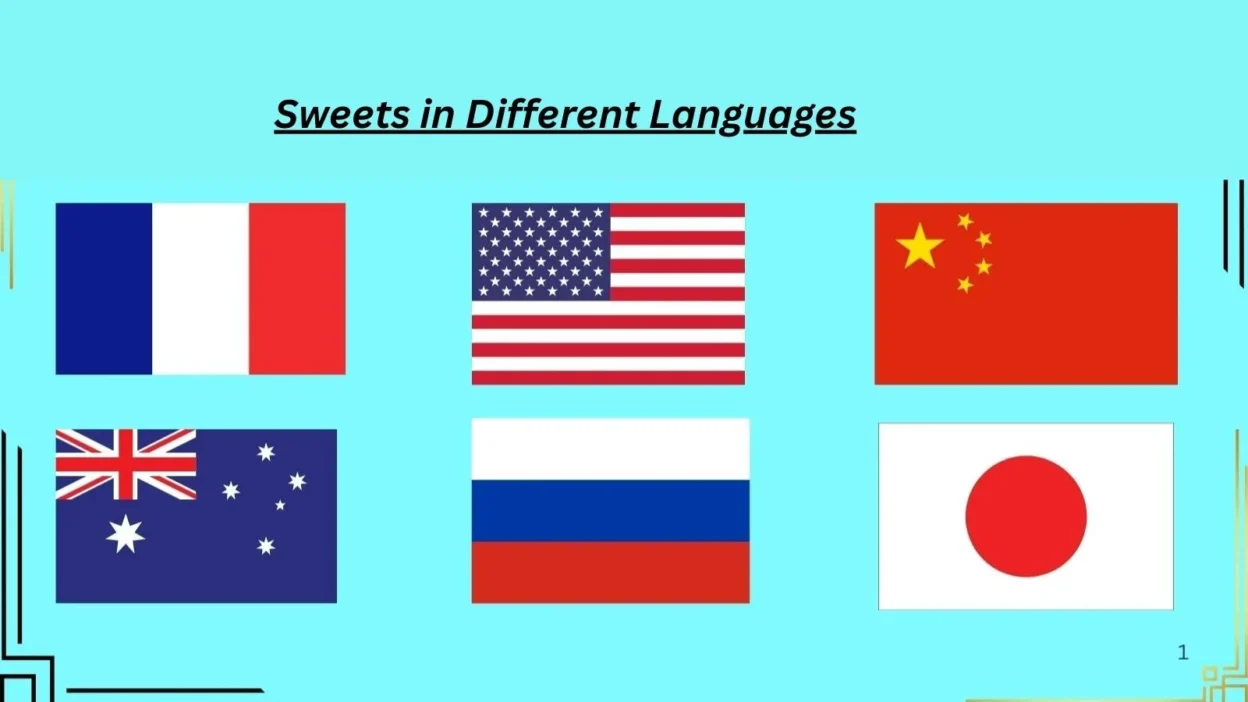
When someone types this phrase into a search engine, their goal is usually to learn how different cultures express the word sweets. They may be travelers, language learners, or food enthusiasts exploring the rich vocabulary of desserts across the globe. This article solves their problem by providing clear translations, meanings, and usage of the word “sweets” in various languages.
Sweets in Different Languages
When people search for the phrase “sweets in different languages”, their intention is usually simple yet meaningful—they want to know how to say this universally loved word across cultures.
Maybe they are travelers wanting to ask for desserts abroad, language learners expanding their vocabulary, or food enthusiasts eager to understand how sweets are spoken of worldwide. Whatever the reason, this article will give you the translations, meanings, and usage of the word “sweets” in multiple languages.
By the end, you’ll be able to confidently use these words when speaking with people from different cultures, especially when sharing food or enjoying desserts together.
Meaning of “Sweets”
The word “sweets” generally refers to sugary treats, desserts, or confections such as chocolates, candies, pastries, and traditional desserts. While the idea of sweet food is universal, each culture has its own unique word to describe them. Some words translate directly to “sweets,” while others reflect cultural variations like candy, dessert, or confection.
Sweets in Different Languages
Here’s how you can say “sweets” in various widely spoken languages:
- Spanish – Dulces
- French – Bonbons or Sucreries
- German – Süßigkeiten
- Italian – Dolci
- Portuguese – Doces
- Russian – Конфеты (Konfety)
- Chinese (Mandarin) – 糖果 (Tángguǒ)
- Japanese – お菓子 (Okashi)
- Korean – 사탕 (Satang) or 과자 (Gwaja)
- Arabic – حلويات (Halawiyat)
- Hindi – मिठाई (Mithai)
- Urdu – مٹھائیاں (Mithaiyan)
- Greek – Γλυκά (Glyka)
- Turkish – Şekerlemeler or Tatlılar
- Dutch – Snoepjes
- Polish – Słodycze
- Swedish – Godis
How to Use These Words
- Traveling Abroad – If you’re in Spain and want candy, you can say “¿Tienes dulces?” (Do you have sweets?).
- Cultural Exchange – When sharing desserts with friends from India, you can call them mithai.
- Learning Languages – Adding words like okashi (Japanese) or halawiyat (Arabic) to your vocabulary makes conversations richer.
- Food Blogging or Business – If you run a food page or sweet shop with international reach, using these translations helps connect with diverse audiences.
The Universal Meaning of Sweets
Sweets are sugary foods that bring joy and celebration worldwide. From candies and chocolates to pastries and traditional desserts, every culture has its own way of naming them. While the taste is universal, the words describing sweets vary, often tied to local traditions and favorite delicacies.
Sweets in European Languages
Here’s how “sweets” is said in some European tongues:
- Spanish – Dulces
- French – Bonbons / Sucreries
- German – Süßigkeiten
- Italian – Dolci
- Portuguese – Doces
- Dutch – Snoepjes
- Polish – Słodycze
- Swedish – Godis
Sweets in Asian Languages
Asia has a wide variety of sweet traditions, and so are the words:
- Hindi – मिठाई (Mithai)
- Urdu – مٹھائیاں (Mithaiyan)
- Chinese (Mandarin) – 糖果 (Tángguǒ)
- Japanese – お菓子 (Okashi)
- Korean – 사탕 (Satang) / 과자 (Gwaja)
- Arabic – حلويات (Halawiyat)
- Turkish – Tatlılar / Şekerlemeler
Sweets in African and Middle Eastern Languages
- Swahili – Pipi
- Amharic (Ethiopia) – ካንዲ (Kandī)
- Hebrew – ממתקים (Mamtakim)
- Persian (Farsi) – شیرینیها (Shiriniha)
- Hausa – Alewa
Using “Sweets” in Everyday Conversations
- Travel: Asking for candy in Spain? Say, “¿Tienes dulces?”
- Cultural Exchange: Sharing mithai during Diwali celebrations.
- Business: A bakery can attract customers globally by using words like doces or bonbons on menus.
- Language Learning: Expanding your vocabulary with simple, tasty words like “sweets” helps in real conversations.
Conclusion
Knowing how to say sweets in different languages is more than just fun vocabulary—it opens doors to culture, hospitality, and human connection. From dulces in Spanish to halawiyat in Arabic, every word carries the sweetness of tradition. Next time you share or ask for desserts abroad, you’ll have the right word to make the moment even sweete.


