When someone searches for “the word hope in different languages,” they are usually looking for more than a simple translation.
They may want a meaningful tattoo, a baby name, a heartfelt caption, a wedding vow line, or simply a deeper understanding of how different cultures express optimism and faith in the future.
Hope is a universal human emotion. Every culture has a word for it but each word carries unique emotional depth, history, and cultural meaning.
In this guide, you will learn how to say hope in different languages, what each word truly means, and how to use it naturally in real conversations.
By the end of this article, you’ll not only know the translations you’ll know how and when to use them correctly.
What Does “Hope” Mean?
In English, hope means:
A feeling of expectation and desire for something positive to happen.
It represents optimism, faith, resilience, and belief in better days. However, in many languages, the word for hope can also imply spiritual faith, aspiration, longing, or trust in destiny.
Understanding this deeper meaning helps you use the word respectfully and accurately.
Hope in European Languages
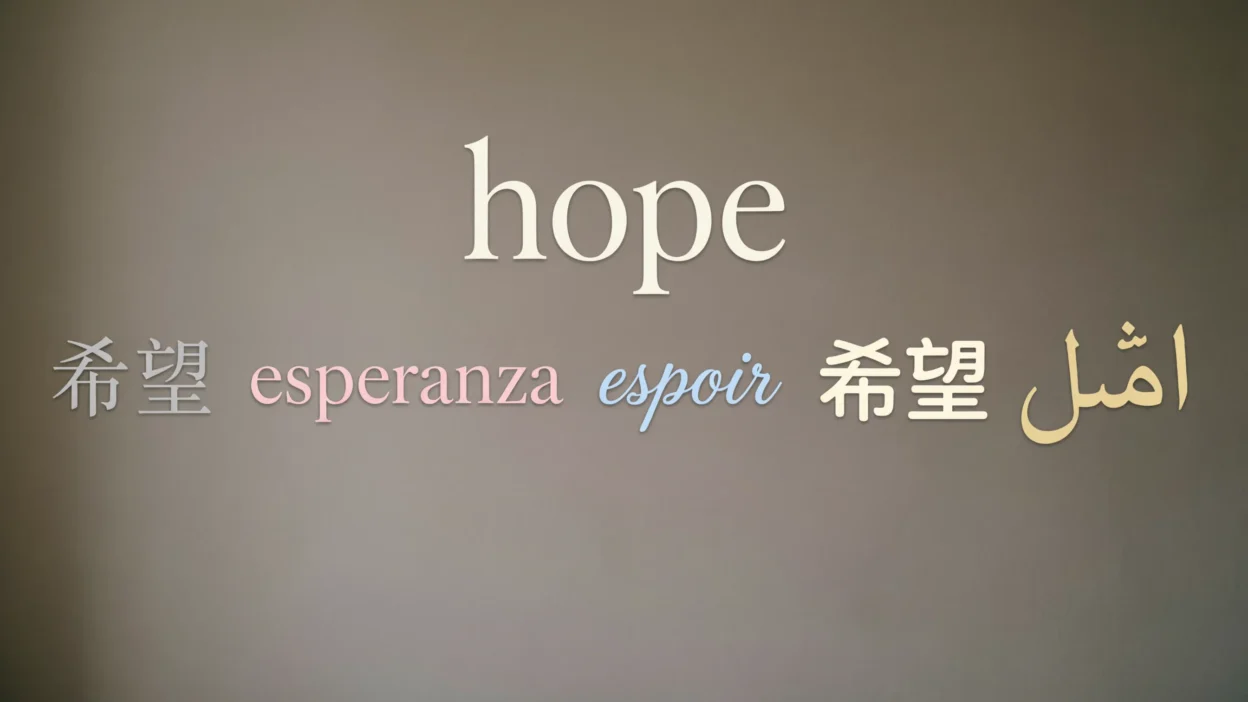
Spanish – Esperanza
Meaning: Hope, expectation
Usage Example:
- Tengo esperanza. (I have hope.)
- Nunca pierdas la esperanza. (Never lose hope.)
In Spanish-speaking cultures, Esperanza often symbolizes strength during hardship. It is also a popular female name.
French Espoir
Meaning: Hope
Usage Example:
- Garde espoir. (Keep hope.)
- L’espoir est important dans la vie. (Hope is important in life.)
In French, Espoir has a poetic and emotional tone. It is often used in literature and romantic expressions.
German Hoffnung
Meaning: Hope
Usage Example:
- Ich habe Hoffnung. (I have hope.)
- Hoffnung gibt Kraft. (Hope gives strength.)
The German word reflects determination and forward-looking optimism.
Italian Speranza
Meaning: Hope
Usage Example:
- Non perdere la speranza. (Do not lose hope.)
- La speranza è l’ultima a morire. (Hope is the last to die.)
Italian gives the word a passionate and emotional feel.
Portuguese – Esperança
Very similar to Spanish but pronounced slightly differently.
Example:
- A esperança é a última que morre. (Hope is the last to die.)
Hope in Middle Eastern & South Asian Languages
Arabic – أمل (Amal)
Meaning: Hope, aspiration
Usage Example:
- عندي أمل (I have hope.)
- لا تفقد الأمل (Do not lose hope.)
In Arabic, Amal carries strong spiritual and emotional meaning. It is also a common name.
Urdu امید (Umeed)
Meaning: Hope
Usage Example:
- مجھے امید ہے سب ٹھیک ہوگا۔ (I hope everything will be fine.)
- امید مت چھوڑو۔ (Do not lose hope.)
In Urdu, Umeed reflects emotional strength and faith, often used in poetry and daily speech.
Hindi आशा (Aasha)
Meaning: Hope
Usage Example:
- मुझे आशा है। (I have hope.)
- आशा मत छोड़ो। (Do not lose hope.)
Aasha is also a common girl’s name in India.
Hope in Asian Languages
Japanese 希望 (Kibō)
Meaning: Hope, wish
Usage Example:
- 希望を持って。 (Have hope.)
- 希望を失わないで。 (Do not lose hope.)
In Japanese culture, this word represents future aspiration and desire.
Chinese 希望 (Xīwàng)
Meaning: Hope, expectation
Usage Example:
- 我有希望。 (I have hope.)
- 不要失去希望。 (Do not lose hope.)
In Chinese, it often expresses positive expectation about the future.
Korean 희망 (Huimang)
Meaning: Hope
Usage Example:
- 희망을 잃지 마세요. (Do not lose hope.)
- 저는 희망이 있어요. (I have hope.)
It symbolizes optimism and emotional resilience.
Hope in Other Languages
Russian Надежда (Nadezhda)
Meaning: Hope
Usage Example:
- У меня есть надежда. (I have hope.)
- Надежда умирает последней. (Hope dies last.)
This word is also a common female name in Russia.
Greek Ελπίδα (Elpida)
Meaning: Hope
In Greek mythology, hope remained inside Pandora’s box after all other evils escaped symbolizing its powerful role in human life.
Why Are People Searching for “Hope” in Different Languages?
People usually search this keyword because they want:
- A meaningful tattoo word
- A name for a baby
- A motivational caption
- A word for branding or business
- A line for a speech or wedding vow
- To connect with someone from another culture
- To learn emotional vocabulary in another language
Simply copying a translation from Google can sometimes lead to mistakes in spelling, pronunciation, or cultural meaning. That’s why understanding context is important.
How to Use These Words Correctly
Before using the word “hope” in another language, follow these steps:
- Double-check the spelling (especially for tattoos).
- Learn the correct pronunciation.
- Understand whether the word is formal or casual.
- Know if it has religious or cultural meaning.
- Use it in a full sentence when possible for better impact.
For example, instead of just writing “Esperanza,” you might write:
- “Nunca pierdas la esperanza.” (Never lose hope.)
This adds emotional strength and clarity.
Final Thoughts
Hope is one of the most powerful words in any language.
Whether you choose Esperanza, Amal, Umeed, Kibō, or Nadezhda, the meaning remains universal belief in better days and strength during difficult times.